REGENERATIVE AGRICULTURE:
THE CROCODILE IN THE SWIMMING POOL
Why an ecological-sounding promise of the future needs clear boundaries
THE CLEAN POOL
Sometimes danger is not where we expect it to be.
Not in the dark forest, not in the open sea, not in the wild river. But in an orderly place. In a clean pool. In a public swimming pool. Where everything appears controlled: water level, pool edge, lifeguard, sunbathing lawn, entrance ticket, pool regulations. It is precisely there that a crocodile is hardest to recognise, because it does not belong there.
The term “regenerative agriculture” is such a swimming pool. It sounds clean, future-oriented, ecological and reassuring. It promises living soils, healthy plants, climate protection, biodiversity, water balance and agriculture in harmony with nature. Many of the practices associated with it are indeed sensible: permanent soil cover, cover crops, mulch systems, reduced tillage, humus build-up, diversity, water retention.
But something else is swimming in the same pool, and it is not harmless: agrochemicals, industrial input logic, CO₂ accounting, carbon-credit markets, digital control and the old belief that living systems can be technically steered, optimised and, where necessary, chemically corrected.
So the crocodile is not the idea of regenerating soils. That idea is right.
The crocodile is the corporate version of a concept that sounds like living soil, yet brings herbicides, fungicides, insecticides, carbon accounting, productivity gains and industrial dependencies into the pool with it.
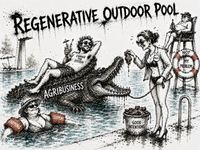
Some people think they are drifting on a green lilo. Perhaps they are already sitting on the back of a dangerous reptile.
A PLANT IS NOT A DRINKING STRAW
A plant is not a passive recipient of nutrients.
It does not simply stand in the soil like a drinking straw in a glass, waiting for humans to supply the right mixture of nitrogen, phosphorus, potassium and plant protection products. A plant is part of a living web of relationships. Through its roots it releases sugars, proteins, organic acids and other compounds into the soil. It feeds bacteria, fungi and other soil organisms. These organisms, in turn, unlock nutrients, dissolve minerals, transform organic matter, stabilise soil structure, regulate pathogens and make the soil habitable for the plant.
Soil is not a storage room. It is a living system of digestion, communication and supply.
The American soil microbiologist Elaine Ingham has been pointing to this for decades. Her work on the Soil Food Web translated a simple but far-reaching insight into practice: plant health does not arise primarily from external chemical supply, but from functioning biological relationships in the soil. Bacteria and fungi transform organic matter and mineral parent material. Protozoa, nematodes and other soil organisms feed on microbes and, in doing so, release nutrients in plant-available forms. Plants help steer this process through root exudates. They invest carbon into the soil and receive nutrients, protection, structure and resilience in return.
This is not a romantic idea. It is the biological foundation of fertile soils.
WHAT THE LABORATORY DOES NOT SEE
In a living soil, a large proportion of nutrients is not simply “freely available”, but bound in minerals, organic matter, clay-humus complexes, microbes, fungal networks, roots and soil aggregates. A conventional soil analysis can therefore indicate that little available phosphorus is present, even though the soil certainly contains phosphorus in chemical terms. It is simply not present in the readily soluble form that the test captures in the short term.
The living plant then asks a different question from the laboratory: not only “What is immediately soluble?”, but “What can my soil life unlock?”
That shift is fundamental.
FROM DEFICIENCY TO DEPENDENCE
For decades, industrial agriculture taught the opposite. If something is missing, it is supplied. If a plant becomes ill, it is treated. If weeds interfere, they are eliminated. If fungi appear, fungicides are used. If insects feed, insecticides arrive. If soils become sluggish, soluble fertilisers are added. This creates a system that trusts itself less and less and becomes increasingly dependent on external interventions.
This development did not fall from the sky. It has a history.
WHERE THE CROCODILE CAME FROM
After the Second World War, industrial capacities, research logics and chemical production systems that had become enormously important during the war were transferred into civilian markets. Nitrogen, central to explosives and ammunition during the war, became the basis of a greatly expanded artificial fertiliser industry in the post-war period. Plants, knowledge and industrial infrastructures that had been built for military purposes were put at the service of a new agricultural logic of productivity.
The mechanisation of agriculture also received a further push after the war. It would be too simple to say literally that tanks became tractors. But as an image it is not wrong: an industrial culture built around steel, engines, heavy machinery, fuel and area output found a new field of application after the war. Agriculture was increasingly understood as a technical production problem. Larger machines, larger fields, less manual labour, more fuel, more tillage, more compaction, more standardisation.
At the same time, chemistry moved out into the fields. DDT had become famous during the Second World War as a synthetic insecticide against disease vectors such as lice and mosquitoes. After the war it became a symbol of the new chemical modernity. What had been celebrated in wartime as a means against typhus, malaria and other vector-borne diseases migrated into agriculture, households, gardens and landscapes. The message was clear: chemistry can control nature.
The so-called “Green Revolution” carried this logic across the globe. High-yielding varieties, irrigation, synthetic fertilisers, pesticides, mechanisation and new market structures increased yields in many places. At the same time, dependencies on external inputs, fossil energy, seed programmes, irrigation, artificial fertilisers and pesticides grew. Agriculture became more productive, but also more vulnerable, more centralised and more chemically dependent.
This development must be viewed fairly in its historical context. After war, hunger, poverty and destroyed supply structures, the Green Revolution did not appear to many people as a wrong turn, but as hope. High-yielding varieties, fertilisers, irrigation and mechanisation did indeed help to increase yields and improve food security. Many committed, sensitive and intelligent people saw in it a way to fight hunger and overcome poverty in farming communities. The criticism is therefore not directed against the hope of food security at the time, but against the long-term consolidation of a system that made fertility increasingly dependent on external inputs, chemical control, fossil energy and global corporate structures.
“PLANT PROTECTION” IS A BEAUTIFUL PHRASE
Anyone who knows this history hears the term “plant protection products” differently.
It sounds caring, reasonable, almost medical. As if one were protecting a plant. These are poisons designed to act on living organisms. Herbicides kill plants. Fungicides attack fungi. Insecticides kill insects. Many of these substances affect not only the target for which they are applied, but also other living beings, other places and other relationships.
The Vietnam War showed, brutally, how close agricultural chemistry, defoliation, war and industrial production power can be. Agent Orange was a herbicide mixture, used to defoliate forests and agricultural land. It was produced, among others, by Dow, Monsanto and further chemical companies. Dioxin contamination continues to have effects in Vietnam to this day. Soils, bodies, family histories and landscapes carry the traces of a form of chemical warfare that did not end when the war ended.
The crocodile is therefore not a toy.
It is not merely a harmless lilo on which one can drift a little towards the future. The history of agrochemistry is also a history of violence against living systems: against insects, fungi, plants, soils, water, food chains, landscapes and bodies. Not every application is warfare. But the underlying pattern of thought is related: a living relationship is declared a hostile problem and controlled with chemical means.
WHEN POISON TRAVELS
The idea that such substances remain where they are applied has long been untenable. Pesticides are transported via air, dust, water, surface runoff, soil particles and food chains. They are found not only on fields, but in gardens, playgrounds, protected areas, water bodies, soils, plants, animals and humans. Studies show that pesticide residues can be detected far beyond the areas of application, sometimes across whole landscape regions. In Alpine valleys, residues of current-use pesticides have been found not only in fruit-growing areas, but also in distant high-altitude locations and protected areas. Studies of air pollution show that pesticides can be transported over long distances.
More serious still: we are not dealing with single substances in cleanly separated experimental arrangements, but with cocktails. Herbicides, fungicides, insecticides, adjuvants, breakdown products, legacy pollutants, new active substances, PFAS compounds, microplastics, fertiliser residues and other environmental chemicals meet in real ecosystems. There they do not act in isolation, but simultaneously. Their interactions are only partly known. Their long-term consequences for soil life, food chains, aquatic organisms, insects, birds, amphibians and microorganisms are understood only in fragments.
The growing attention paid to PFAS in pesticides is particularly disturbing. These so-called forever chemicals, or their breakdown products, are persistent. Some pesticide active substances themselves belong to the PFAS group; others can degrade into trifluoroacetic acid, TFA. TFA is highly mobile, long-lived and now detectable in water, food and environmental samples. This gives the term “plant protection” a bitter irony: what is sold today as protection for a crop can reappear tomorrow as a lasting burden on whole water and food systems.
Against this background, any agriculture that calls itself “regenerative” must answer a clear question: how can it promise living soils, biodiversity, a functioning water balance and healthy plants, while at the same time retaining chemical substances as normal tools within the system?
Here the crocodile becomes visible.
THE SEDUCTION OF THE GOOD
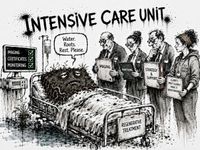
Regenerative agriculture sounds like healing. Like soil building, humus, water, climate resilience, biodiversity and an agriculture that works with nature, not against it. It sounds like an answer to the problems of industrial agriculture. And that is precisely why it is so attractive.
Much of what is described under this term is, at first, sensible: permanent soil cover, cover crops, mulch drilling, strip-till, reduced tillage, direct drilling, more diverse rotations, organic matter, less compaction, more soil cover, greater water storage capacity. Modern technology, too, may at first appear helpful: lighter machinery, precision sowing, drones, robotics, AI-assisted weed recognition, spot spraying instead of blanket application, controlled traffic to reduce soil compaction.
This is the point at which one must be honest: these practices address real problems. Tillage destroys soil structure, accelerates humus loss, disturbs fungal networks, promotes erosion and makes it harder for water to enter the soil. Bare soils are vulnerable. Compacted soils are ill. Monocultures are unstable. An agriculture that keeps soil covered, leaves roots in the ground, holds water and builds organic matter is more sensible than one that tears the soil open every year and leaves it naked.
This explains the fascination of regenerative agriculture.
But it is precisely here that the trap lies.
FUKUOKA’S COUNTER-QUESTION
Arable farming without tillage is not new, and it does not have to be thought chemically. An important example is the Japanese farmer Masanobu Fukuoka. Over decades he developed a form of natural farming in which rice and winter grain such as barley or rye were grown in rotation, without ploughing, without synthetic fertilisers, without pesticides and without prepared compost. The fields were covered with straw, seeds were partly sown in clay pellets, and white clover was used as a living ground cover. Fukuoka reported yields comparable with the best yields in his region, while the soil became more fertile over the years.
Whether Fukuoka’s method can simply be transferred elsewhere is another question. He himself did not understand his work as a recipe, but as a process of searching. That is precisely where its significance lies. Its value is not in copying a Japanese method, but in the attitude: observe, reduce, work with the processes of the place, not against them. Not: which input solves my problem? But: why does this problem arise at all?
THE PLOUGH GOES, THE POISON REMAINS
The modern corporate version of “no-till” often does not ask this question consistently. It reduces tillage but frequently replaces the plough with herbicides. This can reduce erosion and protect soil structure. But it merely shifts the violence. The soil is disturbed less mechanically but controlled chemically. The machine passes less often; the poison remains.
Then a good idea becomes a dangerous shortcut.
Soil rest is regenerative when it arises from living soil cover, diverse rotations, under sowing, mulch, grazing animals, compost, mixed cropping and biological self-regulation. Soil rest is not automatically regenerative if it works only because herbicides kill the plants that would otherwise have been regulated mechanically.
This is the core contradiction: a practice can look similar from the outside and mean something entirely different on the inside.
Mulch drilling can be an expression of living soil care - or a technical component of a system propped up by herbicides.
Direct drilling can protect soil life - or chemically remove weeds.
Spot spraying can reduce the quantity of poison - or stabilise the idea that poison remains a normal tool.
AI and robotics can reduce soil compaction - or make the old logic of control more precise.
Permanent cover can create habitat - or merely be a metric in a climate programme.
That is why it is not enough to ask whether a measure looks “regenerative”. One must ask what logic it carries.
WHEN THE TERM SWALLOWS EVERYTHING
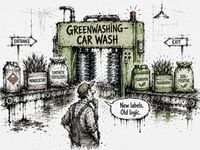
Regenerative agriculture is not a protected ecological standard. Unlike organic farming, it is not clearly regulated, not uniformly defined and not tied to binding exclusions of particular inputs. There is no generally accepted definition, no uniform minimum standard, no clear boundary between genuine ecological regeneration and an apparent improvement of existing agricultural systems.
This openness is not harmless. It is the entry ticket.
For a term that can include everything can, in the end, also include what it ought to overcome.
What is striking is how offensively the term is used by precisely those corporations whose business models have historically been based on seed, plant protection products, herbicides, fungicides, synthetic inputs, digital control and agro-industrial scaling:
Syngenta describes regenerative agriculture as an outcome-oriented production system intended to improve soil, climate, water, biodiversity, productivity and profitability.
Bayer also speaks of an outcome-oriented production model.
BASF explicitly links reduced tillage with herbicide technologies.
Syngenta Biologicals even speaks of the precise application of biological and chemical inputs as part of regenerative agriculture.
This is the decisive point: the means are not limited. The outcomes are promised.
“ORGANIC” DRAWS BOUNDARIES
Of course, “outcome-oriented” sounds reasonable at first. It is indeed not enough simply to follow rules if the soil is still compacted, the water runs off, the landscape becomes impoverished and soil life remains weakened. Organic farming is not automatically diverse, water-retentive, climate-resilient or landscape-intelligent. “Organic” too can be industrial, market-driven and ecologically incomplete.
But “organic” draws boundaries. It says not only what is to be achieved, but also which means do not belong in the system.
Regenerative agriculture, by contrast, often claims to go beyond “organic”: more holistic, more modern, more flexible, more scientific, more measurable, more scalable. Yet without clear ecological exclusions it falls far behind “organic”. It can promise humus build-up, cover crops, reduced tillage, CO₂ balances, biodiversity strips and soil health - while at the same time carrying on with chemical fertilisation, herbicides, fungicides, insecticides and industrial input logic.
Then the system is not changed. It is pseudo-ecologically retrofitted.

THE CO₂ WAREHOUSE WITH WOODPECKERS
This provocative metaphor for a forest is an example of reducing living systems to measurable services: humus, carbon accounting, biodiversity indicators.
Regenerative agriculture addresses the right topics: soil, water, biodiversity, climate, resilience, landscape, fertility. But it can place these topics inside a framework that does not leave the underlying industrial logic behind. Regeneration becomes optimisation. Healing becomes efficiency improvement. Living soil becomes measurable carbon. Biodiversity becomes an indicator. Water balance becomes a management variable. Landscape becomes a project area.
That is the CO₂ warehouse with woodpeckers, this time on the arable field.
One takes a living system, reduces it to a few measurable services, attaches ecological terms to it and declares it the future. The forest becomes a carbon-storage area with biodiversity evidence. The soil becomes a climate account with a cover crop. Agriculture remains within its basic structures but now wears a greener vocabulary.
CULTURAL KNOW-HOW, NOT CORPORATE TECHNOLOGY
Yet other lines of thought and practice have long existed.
Many international projects and field visits have shaped our view of agriculture, cultural landscapes and soil fertility. Historical and contemporary agricultural systems in China were particularly impressive, including during a project consultancy in 2015. There it became visible that long-term stable agriculture is not an invention of modern sustainability programmes. Over centuries and millennia, cultural landscapes emerged that integrated water, soil, terraces, organic matter, diverse uses, local varieties, human labour and regional cycles into finely tuned systems. Such landscapes fed millions of people over long periods without fertility being understood solely as the result of external inputs.
Enduring fertility is not a technical innovation of the present. It is a cultural achievement.
These systems show that much of what is today newly marketed as “regenerative agriculture” has long been deeply rooted in many cultures. Farming knowledge, site-adapted cultural techniques, mixed cropping, composting, water management, terracing, regional varieties, circular economies and close observation of place are not new inventions. They are expressions of an understanding of agriculture as a living, interconnected system.
THE LOST CORE OF PERMACULTURE
The early ideas of permaculture also belong in this context. They were not intended as a collection of recipes. Not as a rulebook, not as an aesthetic garden style, not as a body of theory for people who would rather think and act than philosophise. At their origin lay something more radical: to understand agriculture, water, soil, plants, animals, settlement, energy and human communities as interconnected systems. To work with natural processes instead of constantly controlling them. To create conditions in which fertility, diversity and stability can unfold.
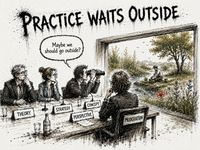
For precisely that reason, it is not always easy today to use the term permaculture without reservation. It too has at times been narrowed: to recipes instead of understanding, to rules instead of experimentation, to theory instead of practice, to symbolism instead of careful observation. Yet the original impulse remains valuable: not to replace nature with ever more interventions, but to understand its patterns and work with them.
This is political. Food production is political. Agriculture is social provisioning, landscape-making, soil building, water retention, cultural technique, a question of ownership, a question of seed, a question of knowledge and a question of the future all at once.
Diversity, regionally adapted seed, site-suitable plants, mixed cropping, composting, mulch systems, agroforestry, animal integration, water retention, local processing and the transfer of farming knowledge are not ecological luxuries. They are essential cultural goods for survival.
An agriculture that becomes increasingly dependent on global corporations, standardised inputs, patented solutions, digital control and CO₂ markets loses not only ecological resilience. It loses cultural intelligence.
Real regeneration begins where this intelligence is taken seriously again: in the soil, in water, in plant diversity, in seed, in the region, in practical experience and in the relationship between people and landscape.
That is something quite different from an agricultural system that retains the old dependencies and gives them a new vocabulary.
THE WRONG QUESTIONS
Terms determine which questions are asked and which are not.
If regenerative agriculture is defined primarily by outcomes, metrics and climate impact, one asks:
How much humus has been built up?
How much CO₂ has been bound?
How much has tillage been reduced?
How can this be measured, accounted for, certified, scaled?
These are not false questions. But they are incomplete.
The more important questions are:
Is dependence on external inputs decreasing?
Is soil life actually becoming more diverse and more stable?
Are mycorrhizae, microorganisms, earthworms, roots and soil structure being strengthened?
Is water being retained in the landscape?
Are rotations becoming more diverse?
Are monocultures being broken up?
Is seed becoming more regional, more diverse and more adaptable?
Is knowledge becoming more decentralised or more centralised?
Is chemical control becoming unnecessary - or merely better justified?
Is agriculture becoming more autonomous, more alive and more resilient, or does it remain dependent on the same corporations that now also supply the language of regeneration?
An agriculture that seeks to restore soil life, biodiversity and water balance cannot treat the means that damage these living processes as neutral tools.
WHAT IS NOT REGENERATIVE
This is precisely why regenerative agriculture needs boundaries.
Not as an ideological purity test. Not as a romantic return to an imagined past. But as a matter of professional and ecological consistency. Whoever says regeneration must also say what is not regenerative.
It is not regenerative when an industrial agricultural system builds up a little more humus but remains chemically dependent.
It is not regenerative when herbicides become the prerequisite for reduced tillage and the term sounds cleaner than the practice.
It is not regenerative when CO₂ balances, certificates and soil-health indicators replace the question of whether the soil is truly becoming more alive.
It is not regenerative when biodiversity is treated as accompanying decoration for a production system that remains input-driven.
It is not regenerative when robotics and AI make the application of poison more precise but fail to ask why poison was normalised in the first place.
It is not regenerative when a term sounds like healing but does not name the illness.
This does not mean that everyone who uses the term regenerative agriculture is dishonest. On the contrary. Many farmers, gardeners, researchers and practitioners are working seriously on living soils, diverse rotations, composting, mulch systems, agroforestry, animal integration, water retention and an agriculture based on biological self-regulation rather than chemical control. This work matters. It deserves respect.
But precisely for that reason, the term must not be surrendered without resistance to those who soften it.
THE CROCODILE STAYS IN THE POOL
The danger is not that regenerative agriculture is too radical. The danger is that it is not defined radically enough. It sounds like systemic change but can become a modernisation of the old system. It sounds ecological yet can remain compatible with industry. It sounds like soil life yet can carry chemical inputs. It sounds like the future yet can continue the business model of the past in a new language.
The crocodile therefore remains in the pool if the term sounds like regeneration but allows the old means and dependencies to keep swimming along.
Regenerative agriculture can be a meaningful term if it has clear ecological boundaries. If it breaks with chemical dependencies instead of legitimising them. If it does not merely claim soil life but protects it. If it brings water, plants, animals, microorganisms, landscape and people back into relationship. If it does not mock old cultural techniques as backward but understands them as repositories of knowledge. If it strengthens seed diversity, regional adaptation and farming experience. If it treats technology as a tool, not as a substitute for understanding. If it not only promises outcomes but excludes destructive means.
Without such boundaries, regenerative agriculture becomes camouflage language.
And then it is not the soil that has been regenerated.
It is only the old system, formulated differently.
SOURCES AND LINES OF EVIDENCE
Note: The sources are intended as lines of evidence for the themes addressed in the essay. The text itself is written as an essay and does not use the sources as continuous footnotes.
Soil biology, Elaine Ingham and the Soil Food Web
• Soil Food Web School: Publications by Dr Elaine Ingham and colleagues. https://soilfoodweb.com/publications/
• Soil Food Web School: Nutrient Cycling - overview of bacteria, fungi, predator organisms and nutrient release. https://soilfoodweb.com/how-it-works/nutrient-cycling/
• AHDB: Soil biology and root exudates / soil health resources. https://ahdb.org.uk/knowledge-library/soil-biology
Post-war history, artificial fertiliser, DDT, Green Revolution
• University of Nebraska-Lincoln CropWatch: The history of fertilizer. https://cropwatch.unl.edu/fertilizer-history-p3/
• U.S. EPA: DDT - A Brief History and Status. https://www.epa.gov/ingredients-used-pesticide-products/ddt-brief-history-and-status
• Encyclopaedia Britannica: Green Revolution. https://www.britannica.com/event/green-revolution
Agent Orange, chemical companies and dioxin impacts
• Dow: Agent Orange - company account of production on behalf of the US Government. https://corporate.dow.com/en-us/about-dow/company/agent-orange.html
• National Academies / NCBI Bookshelf: History of the Controversy Over the Use of Herbicides. https://www.ncbi.nlm.nih.gov/books/NBK236351/
• Aspen Institute: What is Agent Orange? https://www.aspeninstitute.org/programs/agent-orange-in-vietnam-program/what-is-agent-orange/
Pesticide drift, Alpine landscapes and air transport
• Brühl et al. 2024: Widespread contamination of soils and vegetation with current use pesticide residues along altitudinal gradients in a European Alpine valley. Communications Earth & Environment. https://www.nature.com/articles/s43247-024-01220-1
• RPTU: Study shows pesticides spread in an Alpine Valley from the valley to the summit region. https://rptu.de/en/newsroom/detail/news/studie-zeigt-pestizid-ausbreitung-im-vinschgau-vom-tal-bis-in-die-gipfelregion
• European pesticide long-range transport study, 2024. https://pmc.ncbi.nlm.nih.gov/articles/PMC10882970/
Cocktail effects and chemical mixtures
• Kortenkamp et al. / PLOS ONE: Low-Level Exposure to Multiple Chemicals: Reason for Human Health Concerns? https://journals.plos.org/plosone/article?id=10.1371/journal.pone.0096580
• Soil Association: The Pesticide Cocktail Effect. https://www.soilassociation.org/media/gtoczz3f/the-pesticide-cocktail-effect-report.pdf
PFAS, TFA and pesticides
• Donley et al. 2024: Forever Pesticides: A Growing Source of PFAS Contamination in the Environment. https://pubmed.ncbi.nlm.nih.gov/39046250/
• PAN Europe: Ban PFAS pesticides and TFA. https://www.pan-europe.info/campaigns/ban-pfas-pesticides-and-tfa
• PAN Europe / report: Unmasking PFAS pesticides authorised in Europe. https://www.pan-europe.info/resources/reports/2023/11/unmasking-pfas-pesticides-authorised-europe
Regenerative agriculture: lack of definition and corporate use
• Bayer: Regenerative Agriculture - outcome-based production model / definition issue. https://www.bayer.com/en/agriculture/regenerative-agriculture-definition
• Bayer: Regenerative Agriculture. https://www.bayer.com/en/agriculture/regenerativeag
• Syngenta: What is regenerative agriculture? https://www.syngenta.com/agriculture/sustainable-agriculture/regenerative-agriculture
• Syngenta Biologicals: Biologicals and Regenerative Agriculture, including “precision application of biologicals and chemical inputs”. https://www.syngentabiologicals.com/en/biologicals-and-regenerative-agriculture/
• BASF: Sustainable Technologies - herbicides and reduced tillage potential. https://agriculture.basf.us/crop-protection/sustainability/sustainable-technologies.html
• NewClimate Institute 2024: Navigating regenerative agriculture in corporate climate strategies. https://newclimate.org/resources/publications/navigating-regenerative-agriculture-in-corporate-climate-strategies
No-till, herbicides, precision technology
• Penn State: No-till production: farmers can cut herbicide use, control weeds, protect profits. https://www.psu.edu/news/research/story/no-till-production-farmers-can-cut-herbicide-use-control-weeds-protect-profits
• Bayer: Reduced Tillage paper. https://www.bayer.com/sites/default/files/Reduced%20Tillage%20Paper_Final_5_30_19.pdf
• Robotic spot-spraying / herbicide reduction. https://arxiv.org/abs/2401.13931
Masanobu Fukuoka and natural farming
• Masanobu Fukuoka: The One-Straw Revolution. https://www.arvindguptatoys.com/arvindgupta/one-straw-revolution.pdf
• Masanobu Fukuoka: The Natural Way of Farming. https://library.uniteddiversity.coop/Permaculture/The_Natural_Way_of_Farming-Masanobu_Fukuoka.pdf
Permanent agricultural systems in China, Korea and Japan
• F. H. King: Farmers of Forty Centuries; or, Permanent Agriculture in China, Korea and Japan. https://archive.org/details/farmersoffortyce00king_0
The illustrations were created with ChatGPT 5.5 in the “Resonant Space of Resistance”.