APPROACH
PLANNING WITH LANDSCAPE, WATER, SOIL AND USE
We read the place before we plan.
PERMATECTURE considers properties, buildings, open spaces and landscapes as connected systems. Terrain, water, soil, vegetation, use, paths, buildings and care are not treated separately, but developed together.
Our aim is to develop robust, beautiful and usable places that strengthen the landscape, retain water and remain adaptable over time.
THE PLACE SETS THE DIRECTION
Every place has its own logic. Topography, water paths, soil, climate, vegetation, existing buildings, paths and uses show which development is meaningful.
We therefore do not begin with ready-made solutions, but with observation, analysis and an exact understanding of the initial situation.
Only then do appropriate concepts emerge.
WATER, SOIL AND VEGETATION AS A BASIS
Water, soil and vegetation form the basis of living landscapes.
Water should not be discharged as quickly as possible. Where it makes sense, it should be slowed, spread, infiltrated, stored and made available for use.
Soils should be covered, alive and protected from erosion. Vegetation is not understood only as a design element, but as a functional part of the system: for microclimate, soil building, water retention, biodiversity, use and quality of stay.
WATER RETENTION AS AN EXPERIENCE BACKGROUND
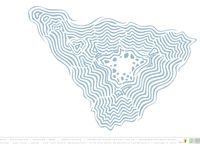
Water retention has accompanied our work for many years. Important influences include the experience at the Krameterhof and the collaboration with Sepp Holzer and Josef A. Holzer (Holzer Permaculture) in numerous projects, workshops and seminars.
This made one thing clear to us: water is not an isolated technical topic. It is always connected with terrain, soil, vegetation, use, climate, care and long-term development.
This experience flows into our planning today. We do not apply ready-made patterns, but read every place anew: Where does runoff occur? Where can water be slowed? Where can it infiltrate, be stored, distributed or made available for vegetation and use?
THINKING BUILDINGS AND LANDSCAPE TOGETHER
Architecture does not end at the facade.
Buildings, courtyards, paths, gardens, agricultural land and landscape spaces influence each other. Location, orientation, access, materiality, water retention, vegetation and use determine how a place functions.
That is why we develop buildings and open spaces in relation to terrain, landscape and everyday life.
TAKING USE SERIOUSLY
A good concept must fit the way people live and work on site.
Use, care, management, access, machinery widths, path layout, quality of stay, seasons and long-term development are considered from the beginning.
This creates solutions that work not only on paper, but in everyday life.
WORKING WITH SIMPLE, ROBUST STRUCTURES
We prefer robust, comprehensible and maintainable solutions.
Good projects often do not arise from maximum technical complexity, but from intelligent spatial order: understanding water paths, using terrain, placing vegetation well, separating conflicting uses, strengthening transitions and developing existing structures further.
CONNECTING DESIGN AND FUNCTION
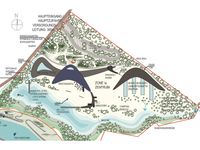
Ecological function and design belong together.
A place should retain water, protect soil, create habitats and enable use. At the same time, it should be spatially clear, beautiful, legible and pleasant.
Our planning therefore connects technical, ecological and spatial questions.
THINKING ABOUT IMPLEMENTATION FROM THE START
A concept is only as good as its implementability.
That is why we consider costs, care, construction sequence, permits, funding opportunities, available materials, contractors and practical implementation steps already in the concept phase.
If needed, we also support projects during implementation.
OUR WORKING PROCESS IN FOUR STEPS
1. • Understand
We clarify the initial situation, goals, problems, potentials and framework conditions
2. • Analyse
We read terrain, water paths, soil, vegetation, use, buildings, paths and development possibilities.
3. • Develop
We design a spatial concept with measures, priorities and implementation logic
4. • Support
We assist with coordination, funding, permitting, detailed planning, implementation or care.
WHAT THIS APPROACH IS SUITABLE FOR
Our approach is suitable for:
• private properties and gardens
• farmsteads and buildings in their landscape context
• agricultural land and farm areas
• ponds, swales, stream corridors and wet zones
• structured cultural landscapes
• public open spaces and recreational areas
• municipal and funding projects
• educational places and ecological development projects
REQUEST A PROJECT
Would you like to know what potential a place has?
We help you develop properties, farmsteads, gardens, agricultural land, buildings or landscape spaces as connected systems.
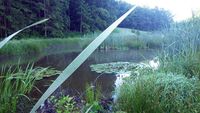
For those who would like to explore our approach in greater depth, we have prepared detailed articles — for example on decentralised water retention, neophytes, the question of why climate is more than CO₂, regenerative and syntropic agriculture, and Keyline.